
Spain's specialty coffee scene has grown fast over the past few years, and there are now more than a dozen serious roasters producing exceptional beans. The problem is no longer finding good coffee. The problem is knowing where to start. This guide covers what to look for when buying specialty beans in Spain, how to match beans to your brewing setup, and which roasters are worth your attention.
What Makes Specialty Coffee Different
The coffee you find in most Spanish supermarkets is commercial grade, often torrefacto (roasted with sugar), and designed to taste strong and consistent. Specialty coffee is a different product entirely. The beans are scored 80 or above on a 100-point scale by trained tasters, sourced from specific farms or lots, and roasted to bring out the natural characteristics of the bean rather than masking them.
In practice, this means the coffee tastes like something specific. A washed Ethiopian might taste like jasmine and bergamot. A natural Colombian could have notes of dark cherry and milk chocolate. A honey-processed Costa Rican might be syrupy and sweet. These are not marketing descriptions. They are the result of where the coffee was grown, how it was processed, and how it was roasted.
Espresso vs Filter: Choosing the Right Roast
The single most important thing to get right when buying beans is matching the roast to your brewing method. Get this wrong and even excellent beans will taste off.
Espresso roasts are developed slightly longer to produce the body, sweetness, and crema that espresso machines need. They work well in moka pots too. If you are making coffee with pressure, look for beans labelled espresso or omni-roast.
Filter roasts are lighter and designed for pour-over methods like V60, Chemex, AeroPress, or batch brew. They tend to be more acidic and complex, with brighter fruit and floral notes. Brewing a filter roast as espresso usually produces something sour and thin. Brewing an espresso roast as pour-over usually produces something flat and heavy.
Some roasters offer omni-roast beans that work across both methods. These are a good starting point if you switch between espresso and filter at home.
Processing Methods: What They Mean for Flavour
You will see processing methods listed on every bag of specialty coffee. This refers to how the coffee cherry was handled after picking, and it has a big impact on flavour.
Washed (or wet-processed) coffees are clean and bright. The fruit is removed before drying, which lets the characteristics of the bean and its origin come through clearly. If you like clarity and acidity, start here.
Natural (or dry-processed) coffees are dried with the fruit still on the bean. This produces heavier, fruitier flavours, sometimes with a wine-like or fermented quality. Naturals are polarising. Some people love them, others find them too much. Worth trying to know where you stand.
Honey-processed coffees sit between washed and natural. Some of the fruit mucilage is left on during drying, producing a sweeter, rounder cup. These are often the most approachable for people new to specialty coffee.
Anaerobic and experimental processes are increasingly common among Spanish roasters. These involve fermenting the coffee in sealed, oxygen-free environments before drying. The results can be intense and unusual, with flavour notes you would not expect from coffee. These are fun to explore once you know what you like.
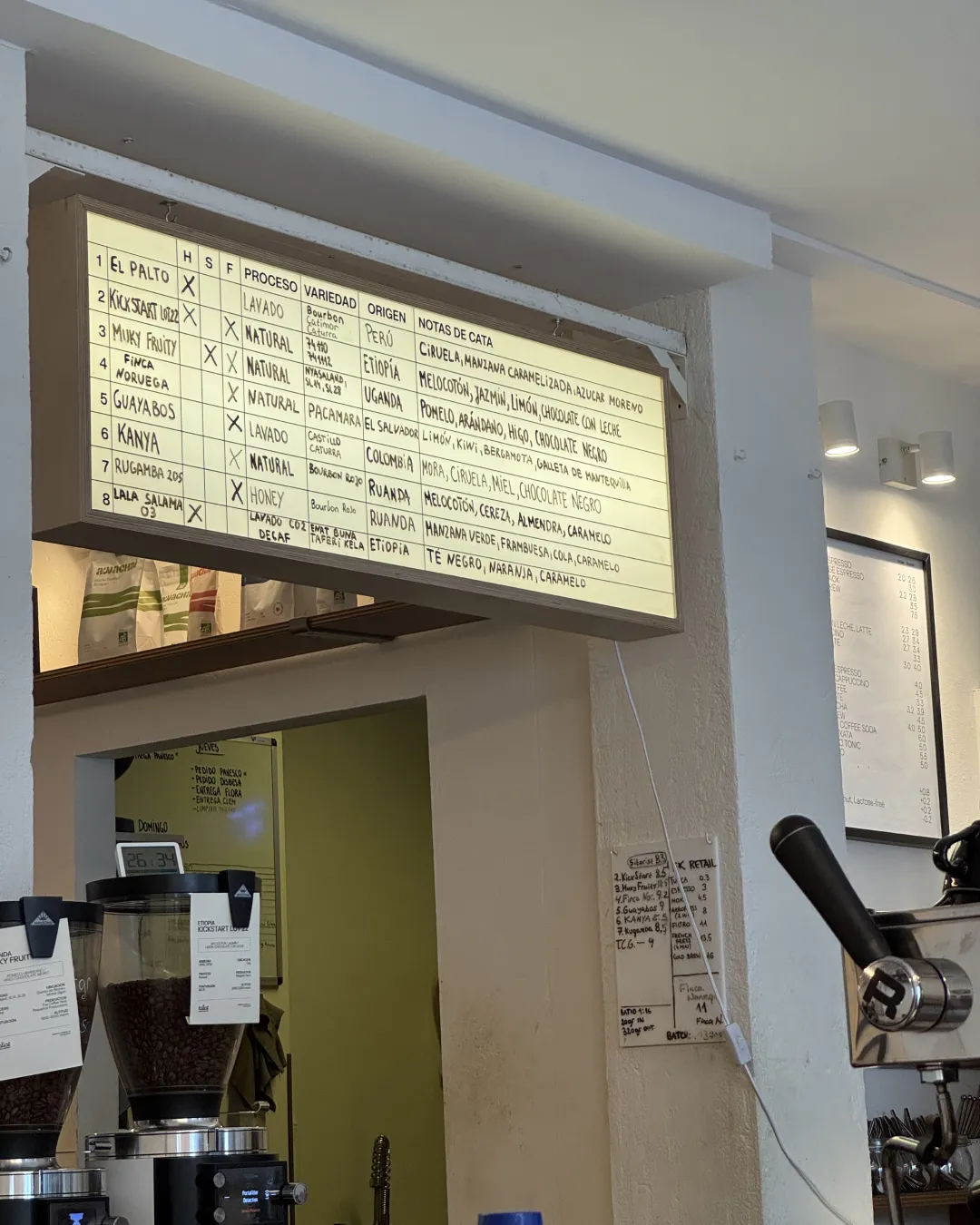
You do not need to memorise any of this. Most specialty cafes list the process on the board behind the counter, alongside the variety, the origin and the tasting notes, so you can read across a row and know roughly what you are getting before you order or buy a bag.
Where to Buy: Spanish Roasters Worth Knowing
Most Spanish specialty roasters sell directly through their own websites and ship nationally within 1-3 days. Here are some worth knowing about, grouped by what they do well.
For espresso at home
Three Marks Coffee in Barcelona produces some of the most reliable espresso blends in the country. Their house blend is a solid daily driver that pulls well on home machines. Roast Club Cafe, also in Barcelona, takes a more creative approach with blends like Blueberry Fudge and Zesty Pavlova that are designed for espresso but taste nothing like traditional dark-roast blends.
Bluebell Coffee Roasters in Valencia offers a range of espresso-focused single origins alongside their blends, with a strong emphasis on sustainability and women-led farming projects.
For filter and pour-over
Hola Coffee in Madrid is consistently one of the best sources for filter-roasted single origins in Spain. Their sourcing is transparent and the roast profiles are precise, letting the origin characteristics shine. Right Side Coffee in Barcelona is another strong option for filter lovers, with a rotating selection of washed Ethiopians and Kenyans that are bright, clean, and complex.
For adventurous palates
Ineffable Coffee pushes processing boundaries with anaerobic and experimental lots that can taste like tropical fruit, cinnamon, or even fermented grape. These are not everyday coffees, but they are worth trying if you want to understand what specialty coffee can do. SlowMov in Barcelona also experiments with unusual origins and processes, roasted in small batches at their Gracia cafe.
For a balanced starting point
Nomad Coffee in Barcelona is one of Spain's most internationally recognised roasters and a safe bet for anyone new to specialty. Their range covers espresso blends, single origins, and filter options at various price points. Puchero offers broad appeal across brew methods with well-developed, approachable roasts.
For buying in person
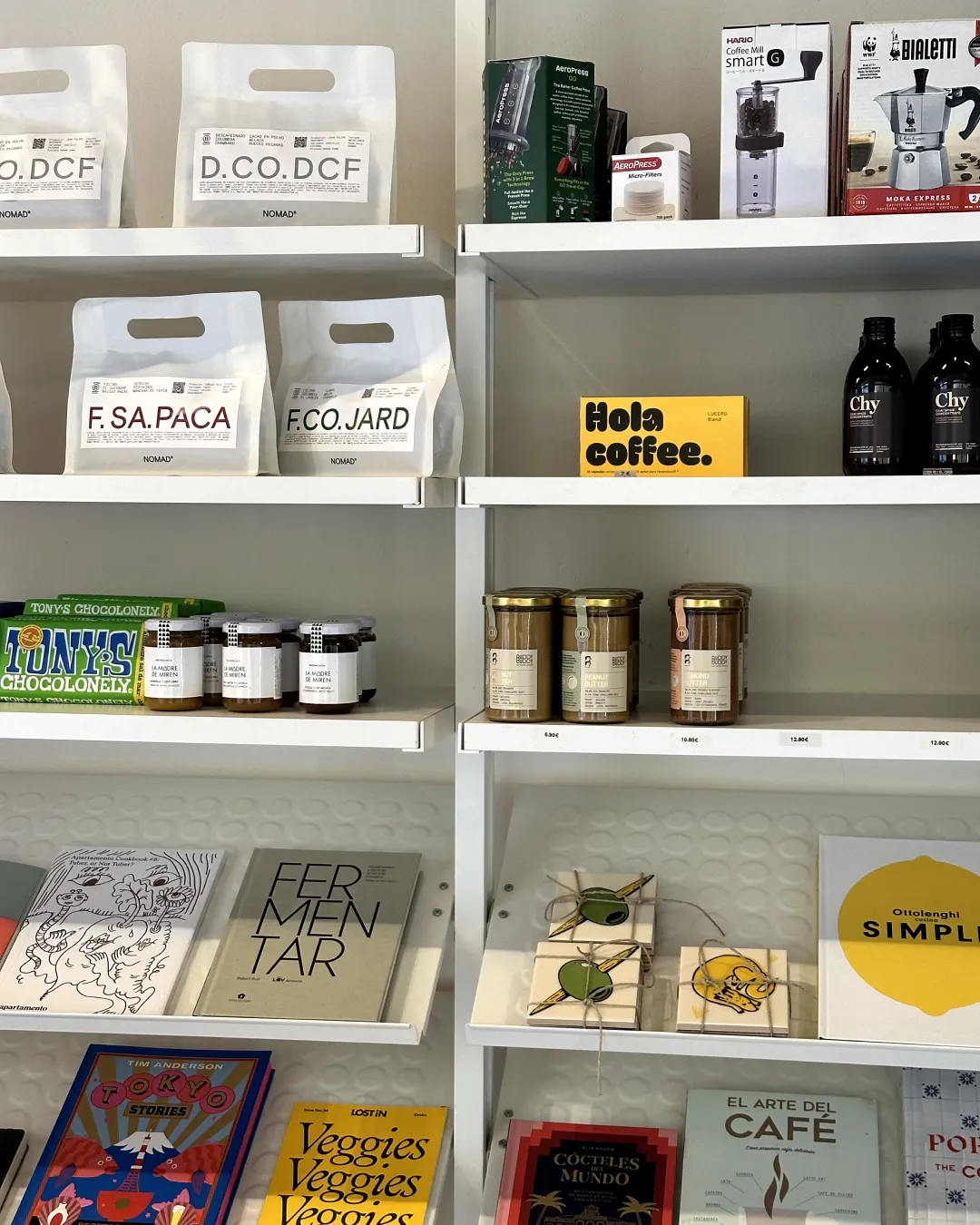
Ordering online is not the only option, and it is rarely the best one for your first bag. Buying at a counter lets you taste the coffee as a shot or a filter before you commit to 250g of it, and you can ask the person serving you what is drinking well that week.
Tallat Coffee Roasters in Valencia's El Cabanyal roasts in small batches on site, so the bags on the shelf come off a machine in the same room. Their board lists process, variety, origin and tasting notes for everything they have on, which makes it one of the easiest places in the city to work out what you actually like. Brewtalist, also in Valencia, takes the multi-roaster approach and pours beans from Barcelona roasters including Nomad, so you can try a Barcelona espresso without ordering it blind.
What to Spend
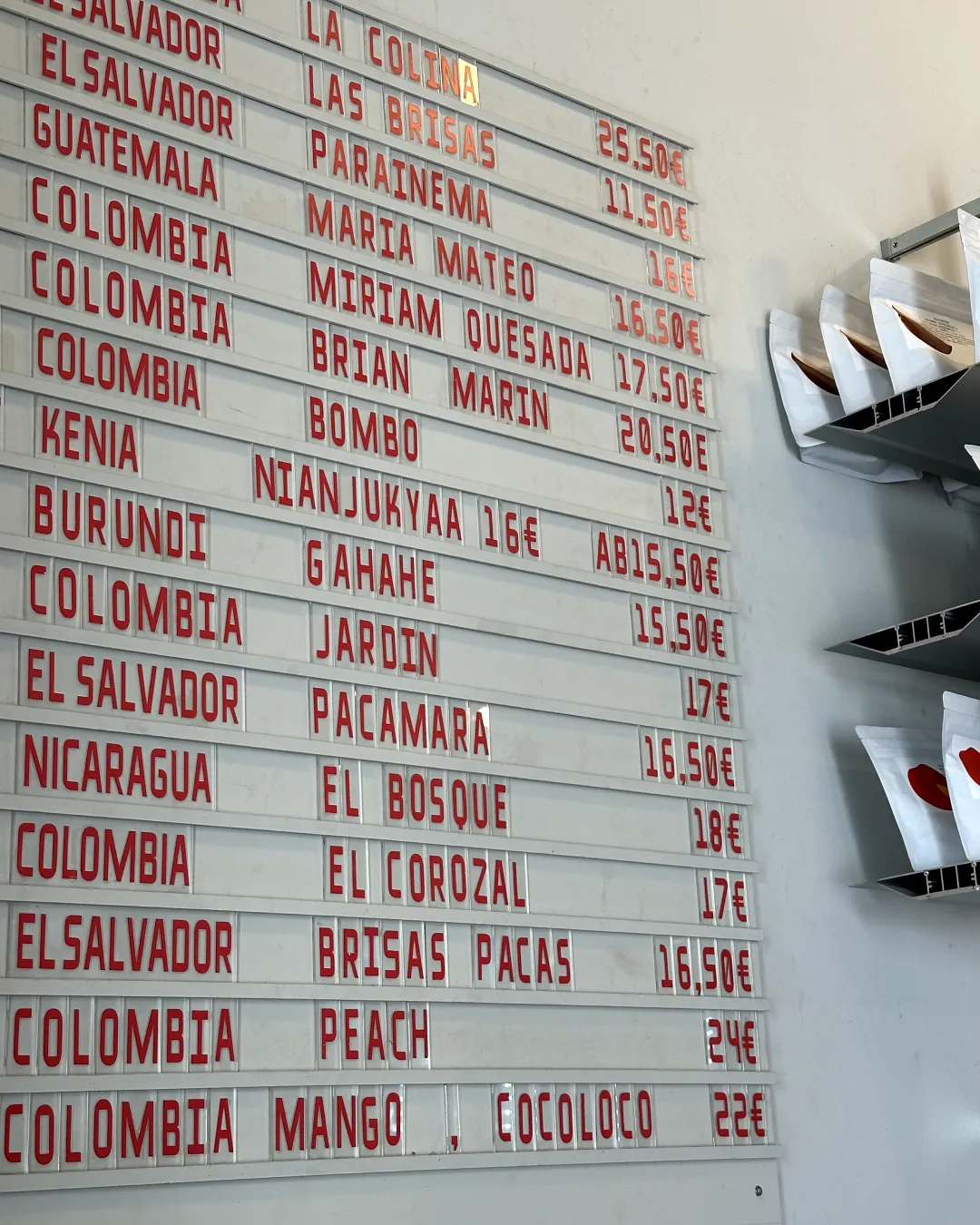
Expect to pay between 11 and 18 euros for a 250g bag from most Spanish roasters, with the majority of everyday single origins landing around 15 to 17 euros. This is roughly 25 to 40 cups of coffee depending on your dose, which works out to somewhere between 30 and 60 cents per cup. Compared to the 1.50-2.50 euros you would pay for a coffee at a cafe, brewing specialty beans at home is significantly cheaper even at the higher end of the price range.
Bags above 20 euros tend to be competition lots, rare varieties or experimental micro-lots with very limited availability. These are worth trying occasionally but are not necessary for great coffee at home.
How to Store Your Beans
Specialty coffee is best consumed within 4-6 weeks of the roast date (printed on every bag). Once opened, keep the bag sealed with the valve closed, or transfer to an airtight container. Store at room temperature away from direct sunlight. Do not refrigerate. If you buy in bulk, you can freeze unopened bags and defrost them as needed, but once defrosted, use within a week.
Start Exploring
The best way to find beans you love is to try different roasters and origins. The CoffeeLobo Specialty Coffee Finder lets you filter across 117 beans from 13 Spanish roasters by brewing method, flavour profile, processing method, origin, and price. A few suggested starting points:
- New to specialty? Filter by "Classic and Sweet" and pick espresso as your brew method. You will get approachable, crowd-pleasing options with chocolate and caramel notes.
- Upgrading your morning espresso? Try a single origin espresso from Bluebell or Three Marks and compare it to a blend. The difference is often eye-opening.
- Want to experiment? Filter by natural or anaerobic processing and see what comes up. These coffees taste nothing like what most people think coffee tastes like.
- Looking for filter coffee? Set your brew method to V60 or Chemex and browse Ethiopian or Kenyan origins for bright, complex cups.
- Need decaf? Filter by Swiss Water Decaf. There are genuinely good options from several roasters that do not taste like a compromise.
Spain's specialty coffee scene is evolving fast. New roasters are launching, established ones are expanding their ranges, and the quality keeps rising. Whether you are buying your first bag or your fiftieth, the finder is a good place to start.
For our guides to the best specialty coffee shops in Spain, visit the Barcelona coffee guide or the Valencia coffee guide.
Follow us on Instagram


